


 iOS Tips & Latest Updates
 Bug Fixes, Unlock Guides
 Giveaways & Freebies

ReiBoot - No.1 Free iOS System Repair Software
Fix 150+ iOS Issues without Data Loss & Safely iOS 27 Upgrade/Downgrade
ReiBoot: No.1 iOS Repair Tool
Fix 150+ iOS Issues, No Data Loss
Seeing the "support.apple.com/iphone/restore" message on your iPhone means the device needs attention during the startup, update, or restore process. The screen is closely related to recovery mode, but you may not need to erase your iPhone immediately. If keeping your data is important, start with the non-erasing options first. If those methods fail, you can then use Apple's recovery process to Update or Restore the device.
In this guide, we'll explain what the support.apple.com/iphone/restore screen means and walk you through the available ways to get your iPhone working again.

Fix iPhone stuck on the support.apple.com/iphone/restore screen and repair iOS system issues.
When your iPhone displays "support.apple.com/iphone/restore," it is showing a recovery-related screen that tells you to connect the device to a computer. The message usually indicates that iOS needs to be updated or restored before the iPhone can start normally.
Actually, when you see this URL, it is usually associated with situations where an iPhone is experiencing significant software issues or is in recovery mode. This screen is commonly associated with interrupted updates, unsuccessful restores, or other situations in which iOS cannot start normally. So why does my iPhone say support.apple.com/iphone/restore? In most of the cases, this is due to reasons below:
Luckily, it is not hard to fix the problem. Let's see how to solve iPhone says support.apple.com/iphone/restore.Before choosing a method, check whether you need to preserve the data on your iPhone.
Should You Update or Restore Your iPhone?
If your iPhone is showing the support.apple.com/iphone/restore screen, you do not necessarily need to erase it immediately. When using Apple's recovery process, try Update first if you have not already done so. Update attempts to reinstall iOS without erasing your personal data. If Update fails or the iPhone still cannot start normally, Restore can reinstall iOS but erases the data on the device.
Quick Comparison of the Fixes
 Please swipe to view
My iPhone 18/17 Pro Max stuck on support.apple.com/iphone/restore. I have followed the instructions, however, the phone keeps on restarting about 15 minutes through the process which disrupts the process. Therefore it cannot finish updating and restoring. I have attempted this more than 8 times but to no avail. I'm losing my mind here so any help would be appreciated. Thanks!
-- support.apple.com/iphone/restore
As part 1 mentioned, "support.apple.com/iphone/restore" often caused by software issues. While traditional methods like iTunes restore or DFU mode can be time-consuming, complicated, and risky (often resulting in data loss), there’s a much simpler solution available—Tenorshare ReiBoot. ReiBoot can be used to exit the recovery/restore screen first; if the issue persists, Standard Repair provides a separate system-repair path.





Follow below 2-steps to solve the problem.
Run the Tenorshare ReiBoot on computer and then connect your computer to your iPhone. Click "Exit" and the software will start getting your iPhone out of that.
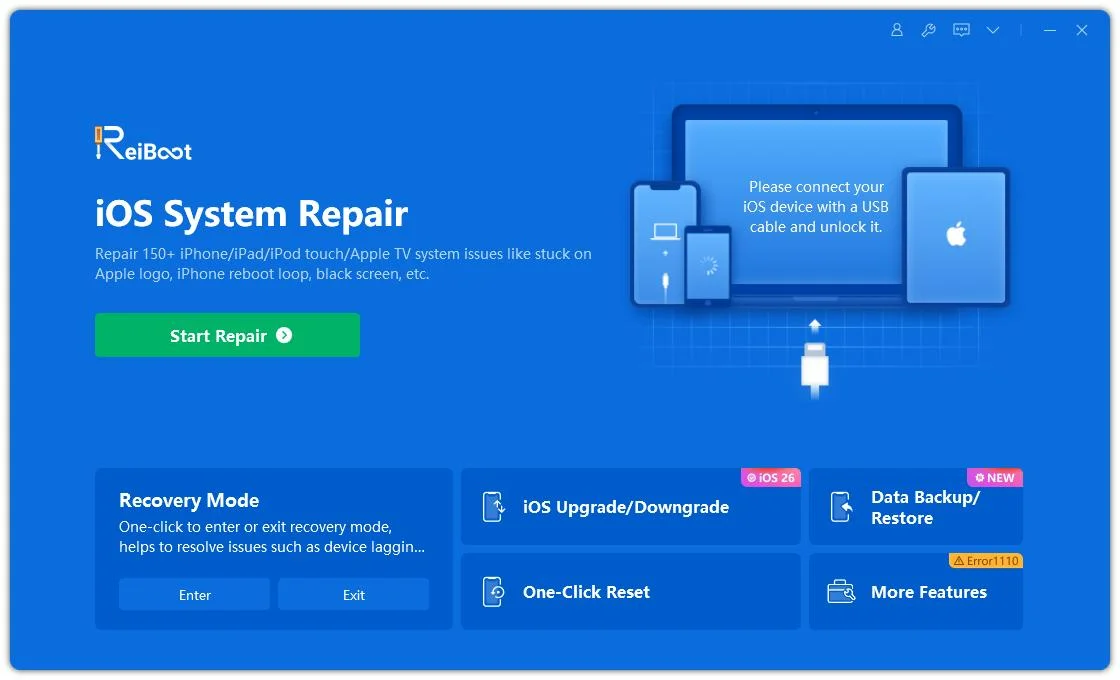
Wait for your device to restart and check whether it starts normally.
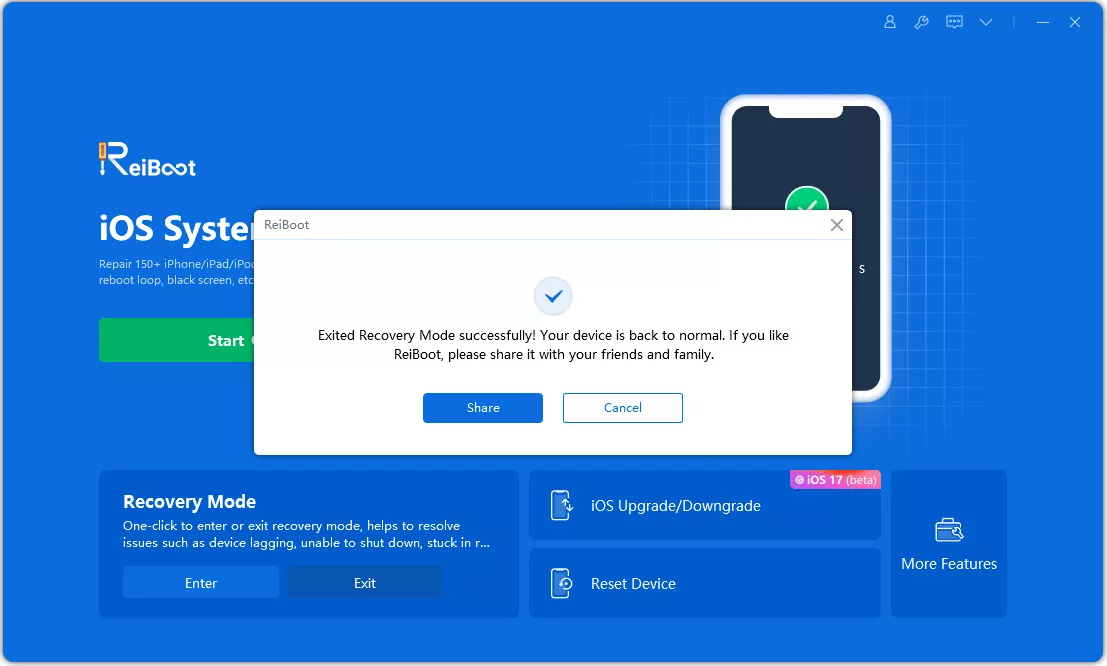
If the restore screen returns after a restart, a deeper repair may be needed.
If the Exit function does not resolve the issue, ReiBoot's Standard Repair can reinstall the required firmware as part of the repair process. This gives users an alternative to manually restore iOS through Apple's recovery workflow.
Follow below steps to solve the problem.
Install and open Tenorshare ReiBoot on your computer. Click "Start Repair" and connect your iPhone using a USB cable.
Choose "Standard Repair" and click to proceed.
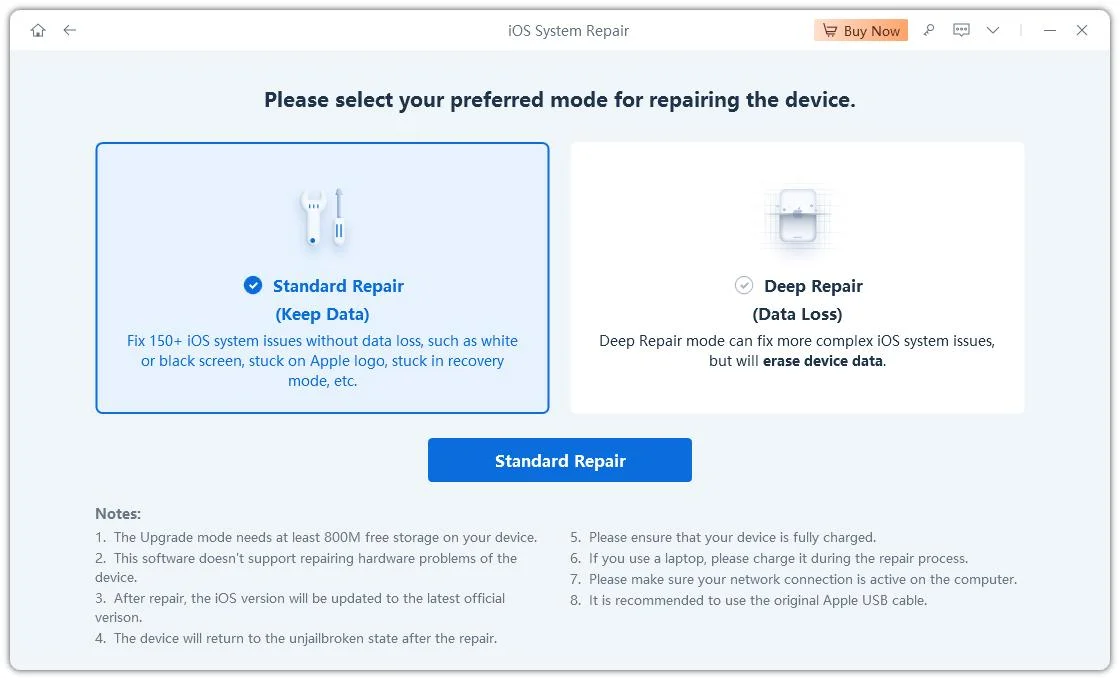
When ReiBoot detects your iPhone, it will suggest a firmware package to download. Click "Download" to begin.
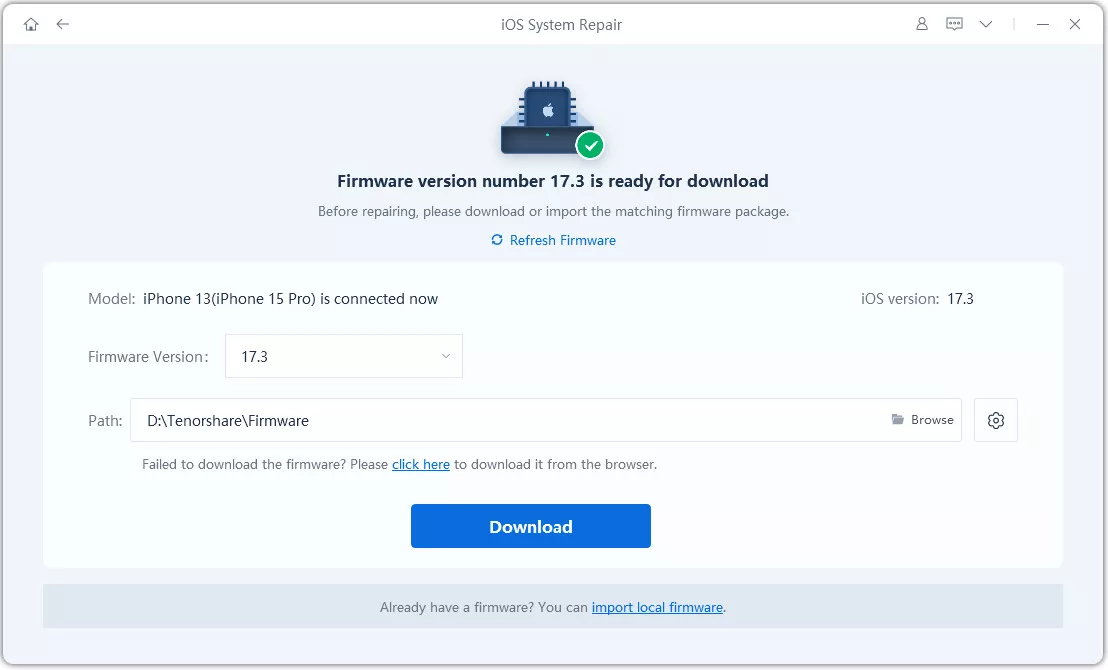
Wait for the download and repair process to complete. Your iPhone will restart automatically when finished; then check whether the restore screen issue has been resolved.

Watch the video guide to see how to fix support.apple.com iphone restore screen.
This method replaces the original "Update iTunes on Your Computer" section. The old section focuses on updating iTunes itself, but the user's immediate goal is to update iOS after the restore screen appears. Current Apple guidance uses Finder on Mac and Apple Devices on Windows for this workflow.
If the restore screen still appears after restarting your iPhone, connect it to a computer and choose Update when the computer offers Update or Restore. Apple states that Update reinstalls iOS while keeping personal data.
On Mac:
On Windows:
Important: If the software download takes more than 15 minutes and the iPhone exits the recovery screen, let the download finish. Then put the iPhone back into recovery mode and repeat the process.
If Update does not resolve the restore screen, you can use Apple's Restore option. Unlike Update, Restore reinstalls iOS and erases the data on the iPhone.
On Mac:
On Windows:
If you use an older Windows setup without Apple Devices, iTunes may still be used. For current Mac versions, Finder is the appropriate Apple workflow.
Pros
Cons

If your iPhone is not recognized by the computer or you encounter errors during the Update/Restore process, check the connection issue first, such as iPhone Not Connecting to Computer. If the issue persists, ReiBoot can help repair iOS system issues and resolve the support.apple.com/iphone/restore issue.
Use ReiBoot for a guided recovery-mode exit or Standard Repair workflow.
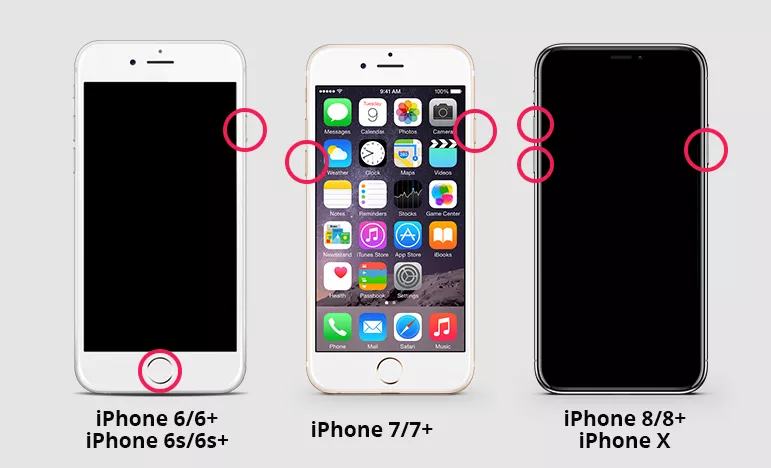
If the screen appeared because of a temporary startup issue, a force restart is a quick first step and does not erase your data.
For iPhone 8 and newer: Long press the volume up button and then release it. Press and quickly release the Volume Down button. Press and hold the Side button until you see the Apple logo.
For iPhone 7 or 7 Plus: Press and hold both the Side (or Top) button and the Volume Down button until you see the Apple logo.
For iPhone 6/6s, SE or earlier: Press and hold both the Side (or Top) button and the Home button until you see the Apple logo.
Pros
Cons
If none of the ways above worked to fix "iPhone showing support.apple.com/iphone/restore", you should try to put your iPhone into DFU mode. Entering DFU mode requires precise timing. The data outcome depends on the restore operation performed afterward, so treat DFU mode as an advanced troubleshooting option and follow current device-specific instructions carefully:
Watch the video guide to see how to put your iPhone into DFU mode.
For iPhone 8 and later:
For iPhone 7 and 7 Plus:
For iPhone 6s and earlier:

Pros
Cons
It means the iPhone has entered a recovery-related state and needs to be connected to a computer for further troubleshooting. Depending on the situation, the next step may be Update or Restore.
Not necessarily. If the computer offers Update or Restore, Apple recommends trying Update first when you have not already done so. Update is intended to reinstall iOS without erasing personal data, while Restore erases the device.
Start with a force restart. If the restore screen returns, connect the iPhone to a Mac or Windows PC and try Update before Restore. If Apple's official recovery process does not resolve the issue, you can try an iOS system repair tool such as ReiBoot as an alternative solution.
If the restore screen returns after a restart or Update, iOS may still be unable to start normally. Check the computer connection, retry the official recovery process, and note any error message or code shown during Update or Restore.
If your iPhone cannot update or restore in Recovery Mode, first check the connection between your iPhone and computer, then try the recovery process again with the latest Apple software. If the issue continues after Apple's recommended steps, an iOS system repair tool like ReiBoot can help resolve software-related issues that prevent your iPhone from starting normally.
If your iPhone is stuck on the support.apple.com/iphone/restore screen, start with the least destructive option that matches your situation. Try a force restart first, then use Apple's Update workflow if the device is detected by a Mac or Windows PC. If Update fails, Restore can reinstall iOS but will erase the device. For users who prefer a guided system-repair workflow, ReiBoot provides Exit Recovery Mode and Standard Repair options. Tenorshare ReiBoot is the ultimate way to get you all and any iOS stuck and other such problems solved including the recovery mode screen, apple logo keeps flashing and fix iPhone stuck on emergency SOS screen problem on your iPhone.


then write your review
Leave a Comment
Create your review for Tenorshare articles
Share this post


ReiBoot - No.1 Free iOS System Repair Software
Fix 150+ iOS Issues without Data Loss & Safely iOS 27 Upgrade/Downgrade
ReiBoot: No.1 iOS Repair Tool
Fix 150+ iOS Issues, No Data Loss
By Sophie Green
2026-09-30 / iPhone Fix