



 iOS Tips & Latest Updates
 Bug Fixes, Unlock Guides
 Giveaways & Freebies

iCareFone - Free iOS Backup tool & Easy Data Manager
Backup/Transfer/Restore/Manage iOS Data with Simple Clicks
Backup/Manage iOS Data Easily
Backup/Manage iOS Data in Clicks
I’m trying to figure out how to backup iPhone to PC without losing any data. I’ve heard mixed things about using iTunes, and I really don’t want to deal with the hassle. Is there a simpler way to backup iPhone to computer?
- from Reddit
Your iPhone holds important data—photos, videos, contacts, messages, and more—that you don’t want to lose. Backing up your iPhone to your PC is one of the safest ways to keep everything secure in case of damage, loss, or accidental deletion.
In this guide, we’ll show you the most effective methods to back up iPhone to a Windows or Mac computer, so you can protect your data without relying only on iCloud.


connect your iPhone with a USB cable, open the Apple Devices app (Windows 10 version 22H2 or later, or Windows 11) or iTunes, and click Back Up Now. If you want to backup iPhone to computer without iTunes or only save selected data such as photos and contacts, use Tenorshare iCareFone. On a Mac, you can backup iPhone to Mac with Finder.
Yes, you can back up your entire iPhone to your computer. On Mac, use Finder (macOS Catalina and later) or iTunes (older macOS). On Windows 10/11, Apple’s current recommended tool is the free Apple Devices app from the Microsoft Store, and iTunes can still create backups too. Some users who hit iTunes backup errors on Windows report that iTunes works again after they remove newer Apple apps like Apple Devices, Apple Music, and Apple TV.


Keep in mind that a computer backup doesn’t include everything. According to Apple, it leaves out content from the iTunes Store and App Store, Face ID or Touch ID settings, Apple Pay information, and Apple Mail data. Health, Activity, and Keychain data are only saved if you create an encrypted backup.
You can also use iCloud or third-party apps like Tenorshare iCareFone for extra features such as selective backup, transferring data to external drives, and more.
 iCareFone- Best Free iOS Backup Tool
iCareFone is a free iOS backup tool that lets you back up and restore your iPhone without iTunes or iCloud limits.
To help you choose, we’ve put together a quick comparison table of these methods below.
 Please swipe to view
The fastest way to backup iPhone to computer without iTunes is to use a selective backup tool like Tenorshare iCareFone: connect your iPhone with a USB cable, choose the data types you want, and click Backup.
Most iPhone users think of iTunes or iCloud first when it comes to backups—but both come with real limitations:
If you want speed, flexibility, and control, a better choice is using a professional iOS backup tool like Tenorshare iCareFone. Unlike iTunes and iCloud, iCareFone allows you to selectively back up only the data you care about—such as photos, contacts, chats, or videos—without overwriting the rest of your iPhone.
With iCareFone, you can:


Connect your iPhone to the PC and run the Tenorshare iCareFone tool. After the iPhone is detected, choose "Backup & Restore" option from the menu situated at the top.
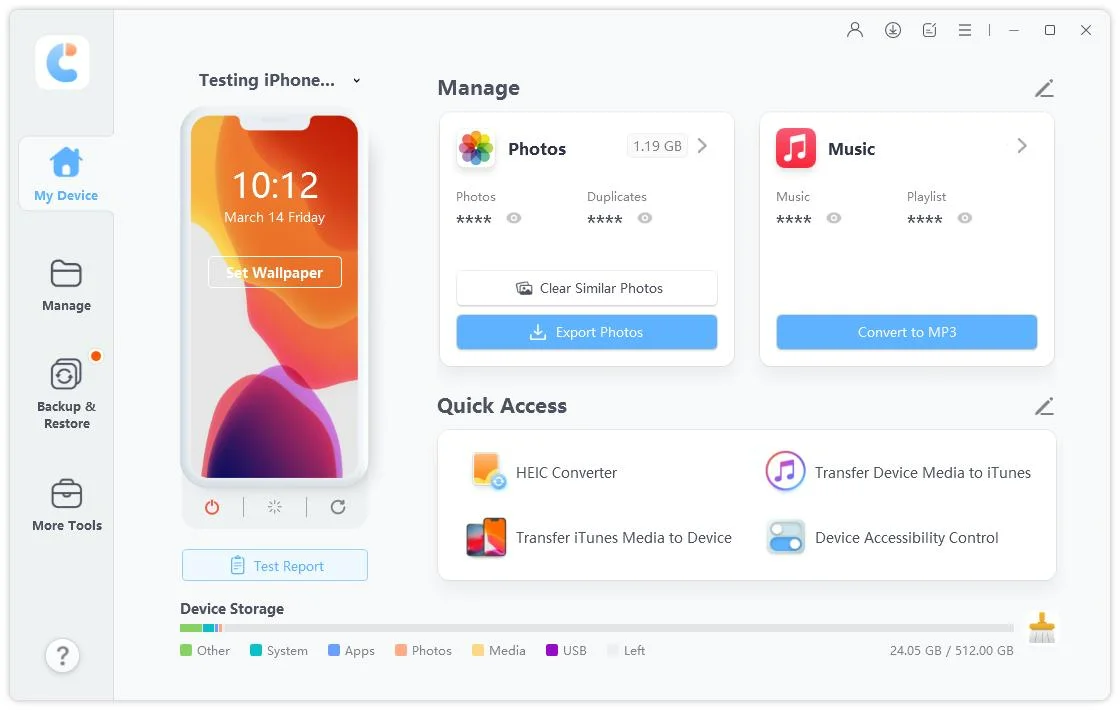
All the files will be selected by default. You can deselect and choose different files that you need to backup.

Once you have selected the files, click Backup and wait for the process to end to backup iPhone to PC computer.

This method suits those who prefer more control over their backups and want a quicker, more customizable alternative to traditional backup options.
This method suits users who want a comprehensive backup solution directly from Apple, without relying on third-party tools or cloud services.
Backing up iPhone to iTunes on Windows is a reliable and free option provided by Apple, including he latest iPhone 18. It allows you to create a complete backup of your device, including app data, messages, and settings. This method is particularly useful if you have limited iCloud storage or prefer keeping your data locally.


iTunes backups can be time-consuming for large amounts of data, and you'll need enough free space on your PC. Also, iTunes must be installed and up-to-date on your computer.
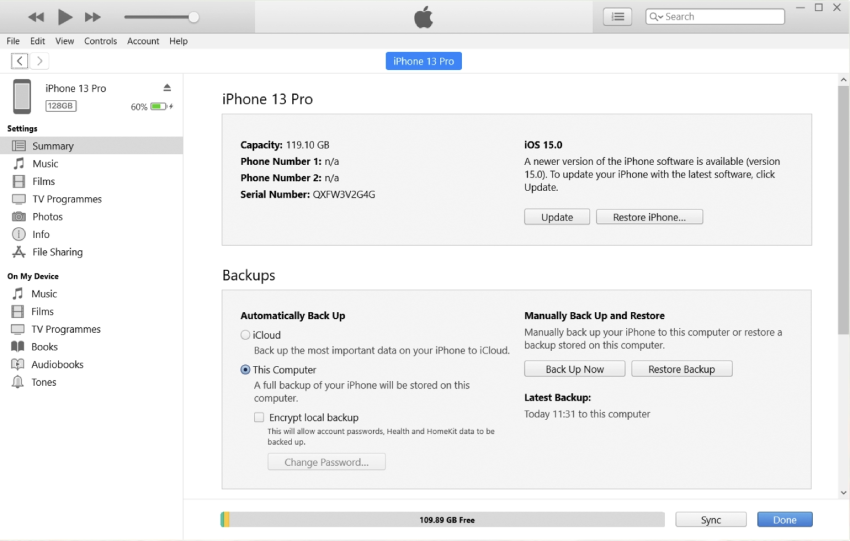
To backup iPhone on Windows 10 (version 22H2 or later) or Windows 11 without iTunes, you can use Apple’s free Apple Devices app from the Microsoft Store instead: connect your iPhone, select it in the sidebar, go to General, choose “Back up all of the data on your iPhone to this computer,” and click Back Up Now. To include Health, Activity, and Keychain data, tick “Encrypt local backup” and set a password first. Write the password down, because encrypted backups can’t be recovered without it.
Go to Summary > Back Up Now. Wait for the process to finish to backup iPhone to iTunes on Windows 10/11. Click Done when finished. You can find on itunes iphone backup location windows 10 on C:\Users\[Your Username]\AppData\Roaming\Apple Computer\MobileSync\Backup\ If you installed iTunes or the Apple Devices app from the Microsoft Store, the backup folder is %USERPROFILE%\Apple\MobileSync\Backup\ instead.
Pros:
Cons:
This solution suits users who prioritize accessibility and automation, but may not be the best for those with large photo collections or limited internet access.
When it comes to iPhone data sync and backup, people will often think of the iCloud. iCloud sync is another method offered by the Apple official, by which you can backup iPhone to computer, like he latest iPhone 18, without the third-party tool. So the synced data can also be a backup from your iPhone. If you don't have a lot of data to sync, then iCloud is a great choice for you, because iCloud only provides 5 GB of free storage.
Note that iCloud Backup (Settings > your name > iCloud > iCloud Backup) saves a full-device backup in Apple’s cloud, not on your PC. To get your photos onto your computer, use iCloud for Windows or iCloud.com, as shown in the steps below.
iCloud offers limited free storage (5GB), which may not be sufficient for extensive photo libraries. You might need to purchase additional storage. Also, a stable internet connection is required for the backup and sync process, which can be time-consuming if you have a large number of photos.
Then tap on iCloud, and you'll see many data types here. Turn on the Photos and wait for a while. You need to connect a fast-speed internet and make sure your iPhone has enough power.

Then you need to click "Apply". Wait for a while and you can backup iPhone to iCloud on computer.


Pros:
Cons:
This method is ideal for Mac users needing a complete local backup without third-party software. It's not as suitable for Windows users or those who prefer wireless backups.
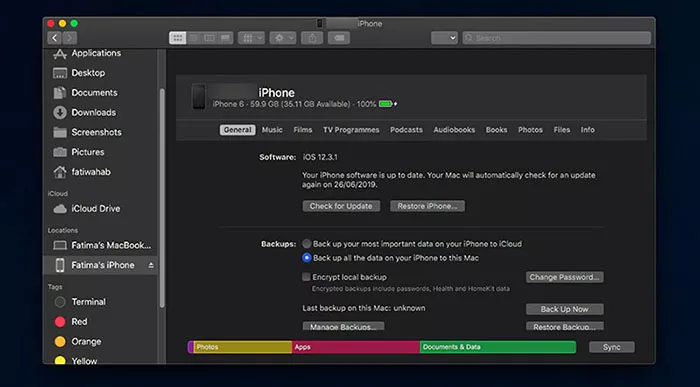
If you're using Mac running macOS Catalina or higher, then you will not be new to Finder, which can also be a solution to backup iPhone to Mac with Finder. Finder can backup your he latest iPhone 18 data on Mac and then restore them to your mac, but you cannot select the backup data types in Finder.
If you have turned on Wi-Fi syncing, you can also backup iPhone to PC wirelessly. After the process is completed, you can restore the backup anytime.
Pros:
Cons:
You might not be able to back up your iPhone on PC due to outdated iTunes/Apple Devices software, a faulty USB cable or port, insufficient storage on your computer, or corrupted backup files. Updating iTunes (or using the Apple Devices app on Windows 10/11), trying a different cable/port, tapping Trust on your iPhone, and checking storage usually fixes the issue.
When you back up your iPhone to your PC with iTunes or the Apple Devices app, the backup is saved locally on your computer:
\Users\[Your Username]\AppData\Roaming\Apple Computer\MobileSync\Backup\%USERPROFILE%\Apple\MobileSync\Backup\~/Library/Application Support/MobileSync/Backup/Each backup is stored in a dedicated folder, and you can’t open the files directly—they are meant to be restored through iTunes, Finder, or the Apple Devices app.
Yes, you can move your iPhone backup to an external hard drive, but it requires some manual steps:
\Users\[Your Username]\AppData\Roaming\Apple Computer\MobileSync\Backup\~/Library/Application Support/MobileSync/Backup/Yes. On Windows 10 (version 22H2 or later) and Windows 11, you can use Apple’s free Apple Devices app. On a Mac, you can use Finder. You can also use a third-party tool like Tenorshare iCareFone to selectively backup iPhone to PC without iTunes or iCloud.
No. iCloud Backup stores your iPhone backup in Apple’s cloud, not on your PC. You can only download items such as photos to your computer through iCloud for Windows or iCloud.com.
Yes. The Apple Devices app is free to download from the Microsoft Store and works on Windows 11 and Windows 10 version 22H2 or later.
Encrypted backups show a lock icon next to the backup in the backup list. You can also check that “Encrypt local backup” is ticked on your iPhone’s page in the Apple Devices app, iTunes, or Finder. If you forget the password, there is no way to recover the encrypted backup.
To backup iPhone to Mac on macOS Catalina or later, connect your iPhone, select it in the Finder sidebar, choose “Back up all of the data on your iPhone to this Mac,” and click Back Up Now. On older macOS versions, use iTunes instead.
You’ve explored the top 4 methods for backing up iPhone to computer, including iCareFone, iTunes, iCloud, and Finder. While the Apple methods back up all your data and can be time-consuming, Tenorshare iCareFone offers a smarter solution to selectively backup iPhone to PC, like photos, videos, contacts, music, WhatsApp chats, etc. More importantly, it is compatible with the latest iPhone 18 and iOS 27.


then write your review
Leave a Comment
Create your review for Tenorshare articles
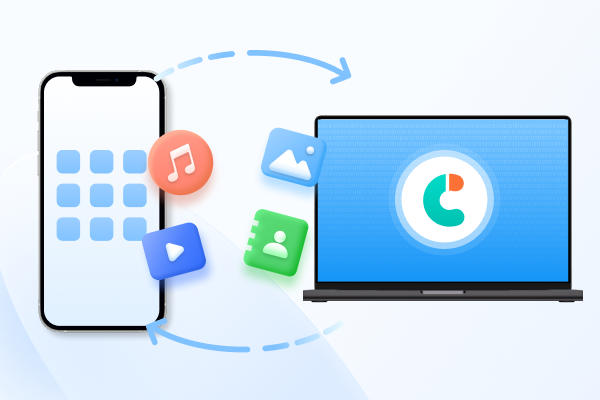
Best Free iPhone Transfer & iOS Backup Tool
Easily, without iTunesShare this post


iCareFone - Free iOS Backup tool & Easy Data Manager
Backup/Transfer/Restore/Manage iOS Data with Simple Clicks
Backup/Manage iOS Data Easily
Backup/Manage iOS Data in Clicks
By Anna Sherry
2026-11-03 / iPhone Backup